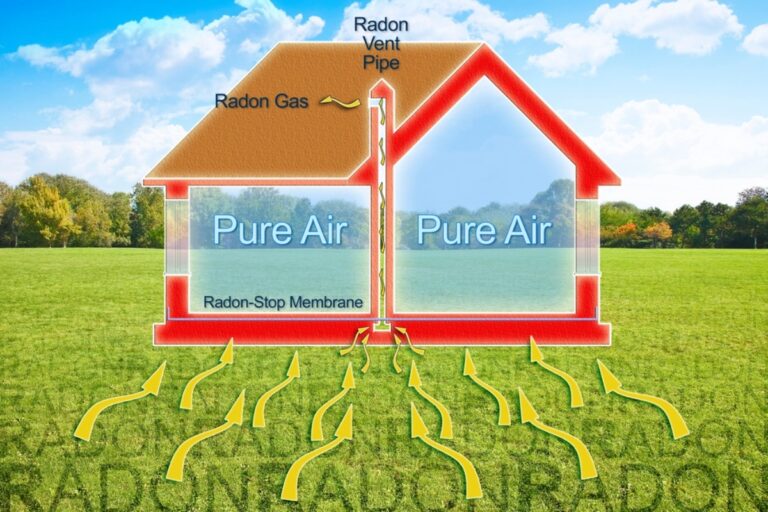
Finishing your basement is an exciting project, adding valuable living space to your home. But as you plan those cozy bedrooms, a new family room, or a functional home office, it’s crucial to consider an invisible, odorless, and tasteless threat that could be lingering beneath: radon gas. Effectively, how to reduce radon levels in a basement during or after finishing is about creating a healthy living environment. The key is to avoid trapping radon and, ideally, to integrate mitigation strategies early in your remodeling plans to ensure the safety of everyone who will spend time in your newly finished space.
Understanding Radon and Its Risks in Finished Basements
Radon is a naturally occurring radioactive gas that seeps up from the ground through cracks in foundations, floor drains, sump pits, and other openings. When it accumulates indoors, particularly in lower levels like basements, it can pose a significant health risk. Prolonged exposure to elevated radon levels is the second leading cause of lung cancer after smoking.
When you finish a basement, you often seal off areas, add insulation, and create more enclosed spaces. Without proper planning, these changes can inadvertently trap radon gas, concentrating it to dangerous levels. Our ultimate goal is always to be protective of human health, and understanding these risks upfront is the first step toward a clean, safe environment for your family.
Why Finished Basements Need Special Attention
The very act of finishing a basement—adding walls, flooring, and sealing off open spaces—can exacerbate a radon problem if not carefully considered. These modifications can alter air pressure dynamics within your home, potentially drawing more radon in. Furthermore, by creating living spaces, you increase the time occupants spend in areas where radon concentrations are typically highest.
The “DOs” for Radon Safety in Your Finished Basement
Taking proactive steps during your basement renovation can make all the difference in creating a healthy space.
DO Test for Radon BEFORE You Start Renovating
This is perhaps the most critical “do.” Before you so much as frame a wall or lay a piece of flooring, conduct a radon test. Short-term and long-term test kits are readily available and relatively inexpensive. Knowing your baseline radon levels will inform your renovation decisions. If levels are elevated (above 4 pCi/L, the EPA action level), you’ll know that integrating a mitigation system is a priority. This information empowers you to design a solution tailored to your unique situation.
DO Integrate a Radon Mitigation System During Construction
If testing reveals high radon levels, or if you simply want to be proactive, installing a radon mitigation system during the renovation is the most efficient and cost-effective approach. This typically involves a sub-slab depressurization system, where a vent pipe is routed from beneath the concrete slab through the house and out above the roofline.
Integrating this system during framing and before drywall allows for discreet installation, concealing pipes within walls and minimizing aesthetic impact. This bespoke approach ensures the system is effective without compromising the look and feel of your new space.
DO Seal All Entry Points Thoroughly
Even with a mitigation system, sealing obvious radon entry points is essential. This includes:
- Cracks in the foundation and slab: Use polyurethane caulk to seal any visible cracks.
- Sump pump covers: Ensure your sump pit has a tight-fitting, airtight lid.
- Floor drains: Use water traps or specialized seals for floor drains.
- Utility penetrations: Seal around pipes, wires, and other penetrations through the slab or walls with appropriate sealants.
DO Consider Active and Passive Systems
While active systems (with a fan) are generally more effective for higher radon levels, passive systems (relying on natural convection) can be designed during construction. Even if you install a passive system initially, pre-installing the necessary piping allows for easy upgrade to an active system later if subsequent testing shows elevated levels. This forward-thinking approach provides flexibility and peace of mind.
The “DON’Ts” for Radon Safety in Your Finished Basement
Avoiding these common pitfalls can prevent radon from becoming a bigger problem in your newly finished space.
DON’T Ignore Radon Testing
This cannot be stressed enough. Skipping radon testing is akin to building a house without knowing if the foundation is stable. You wouldn’t do it for structural integrity, so don’t do it for air quality. Without testing, you have no idea if you’re creating a potentially hazardous environment for your occupants.
DON’T Seal Off Areas Without Ventilation or Mitigation in Mind
When adding walls, cabinets, or built-in elements, be mindful of how you might be inadvertently creating pockets where radon can accumulate. Finishing a basement often involves creating a “tighter” home, which can reduce natural ventilation. If you don’t plan for a dedicated mitigation system or proper ventilation (such as an HRV/ERV system), you risk trapping radon and other indoor air pollutants.
DON’T Assume Your New Flooring Will Block Radon
Many homeowners believe that new carpeting, laminate, or even tile flooring will create an effective barrier against radon. This is a dangerous misconception. While some materials offer a minor resistance, no standard finished flooring material is an airtight barrier against radon gas. Radon will still find its way through microscopic gaps, seams, and perimeters. A true barrier requires specialized membranes or, more effectively, a sub-slab depressurization system.
DON’T Rely Solely on Standard Home Ventilation
Opening a window occasionally or running your HVAC system’s fan for general air circulation is generally insufficient to effectively reduce elevated radon levels. Radon mitigation systems are specifically designed to create a negative pressure under the slab, actively drawing radon out before it enters your living space. Standard ventilation systems are not engineered for this specific task.
After the Renovation: Post-Mitigation Testing and Monitoring
Once your basement is beautifully finished and any mitigation system is installed, it is essential to re-test for radon. This confirms the effectiveness of your efforts and ensures that the system is operating as intended. For active systems, consider telemetric monitoring options, which can provide continuous data on system performance and radon levels, giving you ongoing assurance that the air your people are breathing is clean and safe.
Protecting the health of the people in your building is the core purpose of any environmental mitigation effort. By understanding the do’s and don’ts of radon safety during your basement remodel, you can create a comfortable, beautiful, and most importantly, healthy living environment for years to come.