When it comes to safeguarding the health of people in your building from radon, understanding the various types of radon mitigation systems is the first crucial step. The primary goal of any radon mitigation system is to reduce indoor radon levels to acceptable standards, thereby protecting occupants from the risks associated with long-term exposure. While the underlying principle often involves safely venting radon gas from beneath a structure, the specific design and implementation can vary significantly, depending on your building’s unique characteristics, the underlying soil, and the desired long-term safety.
The Core Principle: Active Soil Depressurization (ASD)
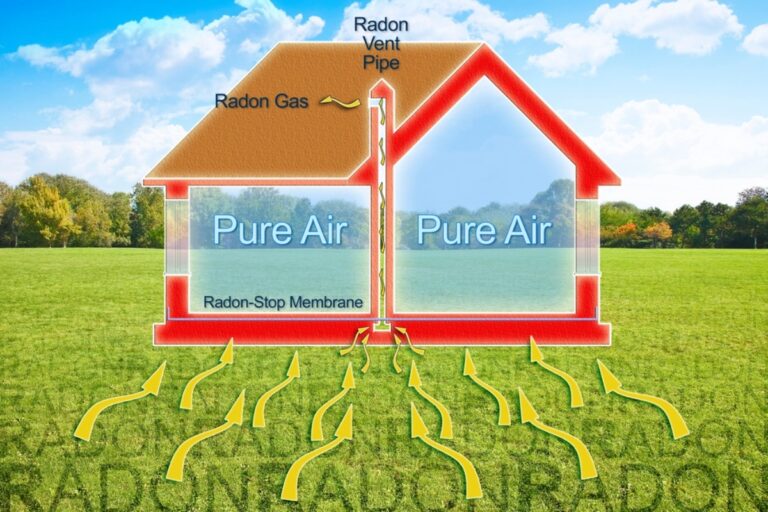
Most commonly, effective radon mitigation systems operate on the principle of Active Soil Depressurization (ASD). This method works by creating a negative pressure field beneath the building’s foundation, drawing radon gas from the soil before it can enter the indoor air, and then safely expelling it into the atmosphere above the building’s roofline. It’s a proven strategy for maintaining clean, safe indoor environments.
Sub-Slab Depressurization (SSD)
Sub-Slab Depressurization (SSD) is perhaps the most prevalent and effective type of ASD system for structures with concrete slab foundations. It involves creating one or more suction points (penetrations) through the slab, often in an inconspicuous location. A fan, typically mounted in an attic, garage, or on the exterior of the building, then draws soil gas from beneath the slab through these suction points and exhausts it safely outside. The size and number of suction points, as well as the fan’s power, are carefully determined based on the slab’s construction, the underlying soil’s permeability, and the building’s footprint. This tailored approach ensures optimal performance and energy efficiency.
Sump Pit Depressurization
For buildings with a sump pump in a basement or crawl space, the existing sump pit can often be adapted for radon mitigation. Sump Pit Depressurization works by sealing the sump pit with an airtight lid and then connecting it to a vent pipe and fan, much like SSD. This method leverages an existing penetration point, making it a cost-effective solution in suitable scenarios. It’s an excellent example of how professionals adapt solutions to your building’s existing features, always with human health in mind.
Drain Tile Depressurization
Many buildings, particularly older ones, have perimeter drain tile systems designed to collect and divert groundwater away from the foundation. These drain tile systems can also be utilized for radon mitigation through Drain Tile Depressurization. By connecting the drain tile to a vent pipe and fan, the system can draw radon-laden soil gas from the entire perimeter of the foundation, effectively creating a broad depressurization field. This approach is especially effective when the drain tile forms a continuous loop around the building.
Mitigation for Specific Building Structures
Beyond the standard ASD systems, certain building characteristics necessitate different approaches. The goal remains the same: to protect the people inside your building from radon exposure.
Crawl Space Depressurization
Buildings with accessible crawl spaces require a specific strategy. Crawl Space Depressurization typically involves covering the entire crawl space floor with a durable, airtight vapor barrier. This barrier is meticulously sealed to the foundation walls and any support piers. A vent pipe is then routed through this sealed membrane and connected to a fan that draws air from beneath the barrier, exhausting it outside. This creates a negative pressure within the sealed crawl space, preventing radon from entering the living areas above. The integrity of the vapor barrier is paramount here, as any gaps can compromise the system’s effectiveness.
Block Wall Depressurization
For buildings constructed with hollow block foundation walls, radon can enter through cracks and openings in these walls. Block Wall Depressurization addresses this by creating suction within the hollow cavities of the block walls. This is achieved by sealing the top of the block walls and then installing a suction point and vent pipe connected to a fan. This system draws radon gas from within the wall cavities, preventing its migration into the indoor environment. It’s a testament to the site-specific solutions developed to address every unique building challenge.
Passive and Hybrid Systems
While active systems are generally preferred for their consistent effectiveness, there are also passive and hybrid approaches.
Passive Radon Systems
Passive radon systems are typically installed during new construction. They consist of a network of pipes installed beneath the foundation and extending through the building to the roof, without the use of a fan. The natural stack effect (warm air rising) creates a slight upward draft, drawing some radon gas out. While less effective than active systems, they can be a good starting point and can easily be converted to active systems later by adding a fan if testing reveals elevated radon levels. Building designers often incorporate these systems to provide future flexibility for homeowners and property managers.
Hybrid Systems
A hybrid system combines elements of both active and passive approaches, or different active approaches, to address complex building conditions. For instance, a building might have both a slab-on-grade section and a crawl space, requiring a combination of SSD and crawl space depressurization techniques. The beauty of these tailored solutions is their ability to adapt to the diverse needs of your property, ensuring comprehensive protection.
Why System Selection Matters: Beyond the Basics
The choice of the right radon mitigation system isn’t a one-size-fits-all decision. It hinges on a careful assessment of several site-specific variables:
- Building Foundation Type: Slab-on-grade, basement, crawl space, or a combination.
- Soil Characteristics: The permeability of the soil beneath your building significantly impacts how easily radon can move and how effectively a suction field can be established.
- Building Pressures: Differential pressures within the building and between the building and the soil can influence radon entry points and system design.
- Radon Levels: The initial concentration of radon dictates the required system’s power and design complexity.
- Aesthetics and Practicality: System components, particularly the vent pipe and fan, need to be installed in a way that is both effective and minimally intrusive.
An experienced professional will conduct a thorough diagnostic assessment, often including sub-slab communication testing, to understand these unique factors. This detailed analysis allows for the design of a bespoke system that is not only highly effective in reducing radon but also energy-efficient and built for long-term reliability. Ultimately, the purpose of a vapor intrusion mitigation system, including those for radon, is to be protective of human health, and a well-designed system is key to achieving that goal for the people in your building.