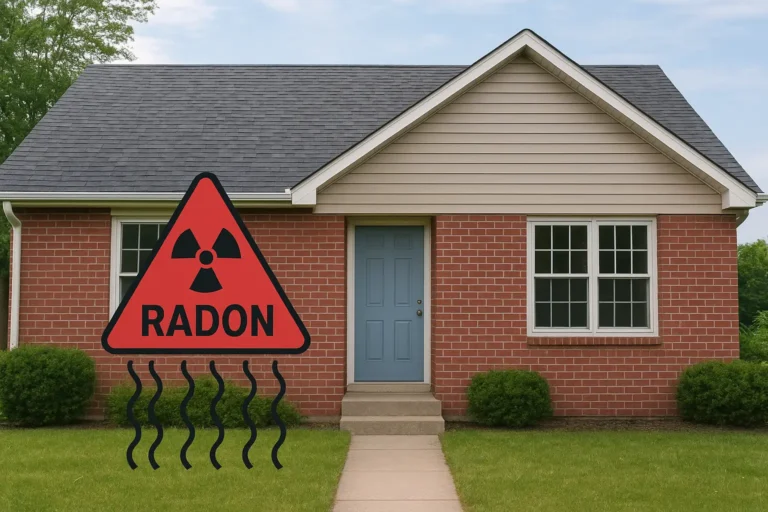
Radon is a naturally occurring, invisible, odorless, and tasteless radioactive gas that poses a significant health risk, primarily as the second leading cause of lung cancer after smoking. It forms from the natural radioactive decay of uranium in soil, rock, and water, and can seep into buildings through cracks in foundations, construction joints, and other openings. Understanding what is radon and how it impacts indoor air quality is crucial for protecting the health of those living and working in buildings.
The Genesis of Radon: Where Does It Come From?
To truly grasp what is radon, it’s helpful to look at its origins. Radon is a byproduct of the natural breakdown of uranium, a heavy metal found in nearly all soils and rocks. This process is continuous, meaning radon is constantly being produced.
Here’s a simplified breakdown:
- Uranium Decay: Uranium (U-238) undergoes a series of radioactive decays, transforming into various elements over billions of years.
- Radium Formation: One of these decay products is radium (Ra-226).
- Radon Gas Release: Radium, in turn, decays to form radon gas (Rn-222).
- Migration: This gaseous form allows radon to move through porous soil and rock.
Because uranium is ubiquitous in the Earth’s crust, radon can be found everywhere, though concentrations vary widely depending on local geology. It’s not limited to specific regions; homes in any state can have elevated radon levels.
How Does Radon Enter Your Building?
Once generated in the soil, radon gas can find its way into any building, whether it’s a home, school, or commercial property. It’s drawn in by a phenomenon known as the “stack effect” or “chimney effect.” Essentially, indoor air is often warmer and less dense than outdoor air, creating a slight pressure difference. This negative pressure differential acts like a vacuum, pulling soil gases—including radon—into the building through any available opening.
Common entry points include:
- Cracks in concrete slabs and foundation walls: Even hairline cracks can allow radon to pass through.
- Construction joints: Where the floor meets the wall, for example.
- Pores and small spaces in concrete blocks: Concrete is not entirely impermeable.
- Loose-fitting pipes and utility penetrations: Gaps around plumbing, electrical conduits, or sumps.
- Floor drains and sump pump openings: Direct pathways from the soil.
- Well water: Radon can dissolve into groundwater and be released into indoor air during showering or washing.
Because these entry points are often below ground level or within the foundation, the gas can accumulate in basements and lower levels, where concentrations tend to be highest. However, it can travel throughout a building, affecting all floors.
Why Radon Matters: Understanding the Health Risks
The primary reason to understand what is radon is its significant impact on human health. When radon gas enters a building, it continues its radioactive decay process, producing tiny radioactive particles. When you breathe in these particles, they can get trapped in your lungs. As they continue to decay, they release small bursts of energy that can damage lung tissue and lead to lung cancer over time.
The EPA estimates that radon causes about 21,000 lung cancer deaths per year in the United States, making it a serious environmental health concern. Unlike other environmental hazards that might have immediate symptoms, radon exposure has no short-term indicators. You can’t see it, smell it, or feel it, which is why testing is so critical.
Who is at Risk?
Everyone is at risk from radon exposure, though the risk increases with higher radon levels and longer exposure times. Smokers exposed to radon face a significantly higher risk of developing lung cancer than non-smokers exposed to the same levels. This synergistic effect underscores the importance of addressing radon in all environments.
Testing for Radon: The First Step to Protection
Given that radon is undetectable by human senses, the only way to know if your building has elevated levels is to test for it. Testing is relatively inexpensive and straightforward. There are two main types of tests:
- Short-term tests: These typically remain in place for 2 to 90 days, providing a quick snapshot of radon levels.
- Long-term tests: These are deployed for more than 90 days, offering a more accurate representation of average radon concentrations over time, as levels can fluctuate daily and seasonally.
If initial short-term tests show elevated levels, it’s generally recommended to follow up with a long-term test or a second short-term test to confirm the readings. The EPA recommends taking action to reduce radon levels if the average concentration is 4 picocuries per liter (pCi/L) or higher.
Mitigating Radon: Creating Safer Indoor Environments
If testing reveals elevated radon levels, mitigation is necessary to protect the occupants. Radon mitigation systems are designed to reduce radon concentrations in indoor air by preventing its entry or diverting it safely away from the building.
The most common and effective method is called sub-slab depressurization. This involves:
- Creating a Suction Point: A small hole is drilled through the concrete slab or foundation.
- Installing a PVC Pipe: A pipe is inserted through this hole, extending down into the soil beneath the foundation.
- Connecting to a Fan: The pipe is connected to a specialized fan, typically located in an attic or outside the building.
- Ventilation: The fan continuously draws radon gas from beneath the foundation and vents it safely outside, above the roofline, where it quickly disperses harmlessly into the atmosphere.
This system creates a negative pressure field beneath the building, effectively reversing the “stack effect” and preventing radon from being drawn indoors. Other mitigation techniques exist, tailored to different foundation types and building characteristics, but the core principle is to manage the flow of soil gas.
Your Role in Ensuring Clean, Safe Environments
Understanding what is radon is the first critical step toward ensuring healthy indoor air. For property owners, developers, and environmental professionals, recognizing this invisible threat and taking proactive steps to test and, if necessary, mitigate, is a vital responsibility. Protecting the people who live and work in your buildings means creating environments free from such unseen dangers. Industry experts who have contributed to state and national standards emphasize that a human health-centered approach to environmental concerns, like radon, is paramount. With proper diagnosis, design, and implementation of tailored solutions, you can achieve clean, safe environments for all.